When the Student is Ready
“When the student is ready, the teacher will appear. When the student is truly ready, the teacher will disappear.”
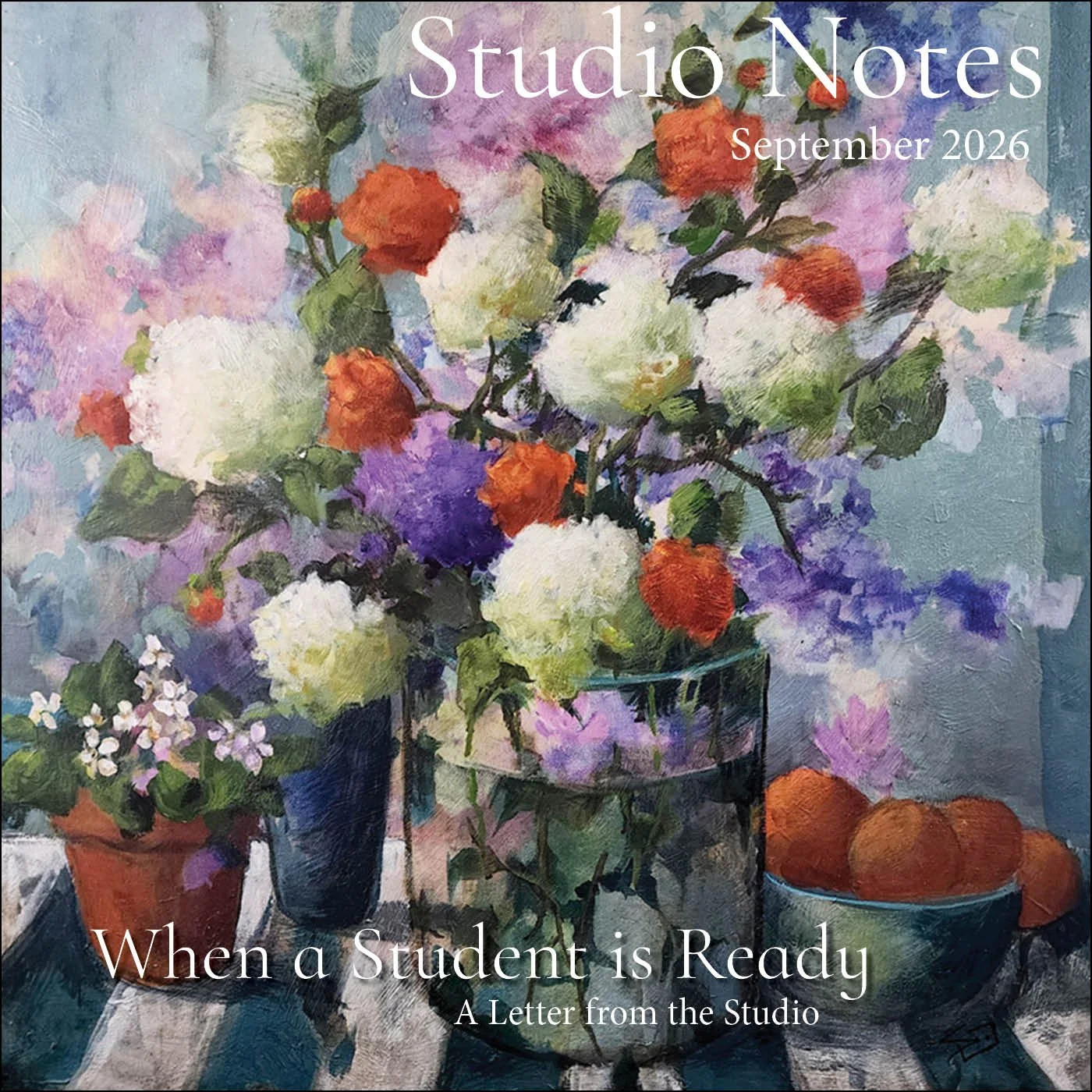
“In the Lime-White” Acrylic 24×24 inches
I recently heard the second half of this saying for the first time, and it made me stop.
I’ve always understood the first part. As artists, we often find the teachers we need when we’re ready to learn something new. Sometimes we seek them out. Sometimes they appear unexpectedly—a class, a book, an artist whose work suddenly makes sense to us, or even a passing comment that stays with us.
But “the teacher will disappear” made me think about my own experience as a painter.
I have been a student of art for a very long time. I still am. I continue to take classes, study other artists, visit museums, read, experiment and look for ways to understand what I'm doing better. There is always something I don't know.
But I've noticed that the way I learn has changed.
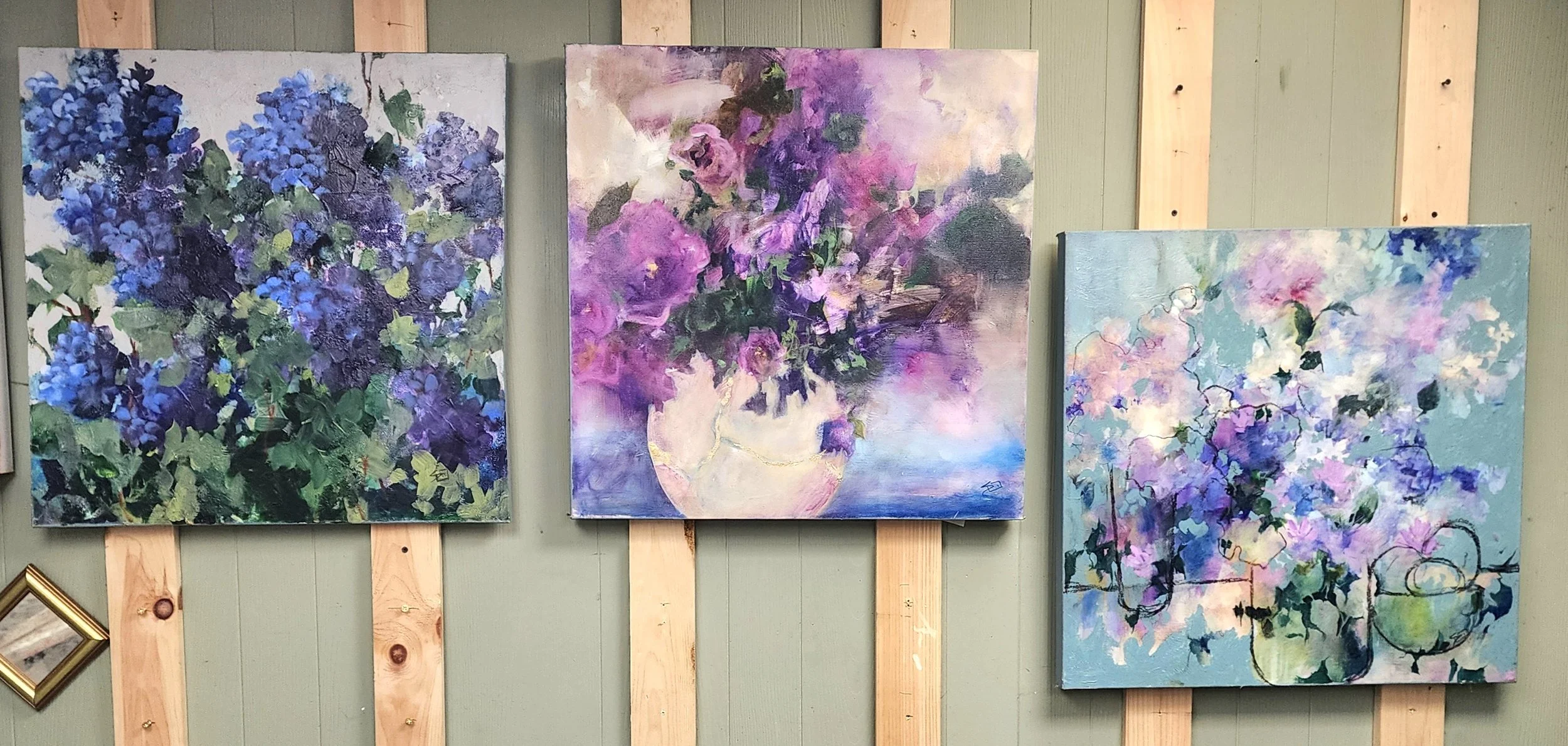
This is the wall easel I built in my studio. I really enjoy being able to paint multiple paintings simultaneously and the ability to step back and see them as a group. The painting on the right is the cover image in progress.
Earlier in my development, I was often looking for answers. I wanted to know how another artist approached something so I could understand how I should approach it. I looked for the right technique, the right composition, the right way to solve a problem.
There is nothing wrong with that. We need teachers. We need people who have traveled a little farther down the road to show us what they've discovered.
But at some point, something shifts.
You begin to trust your own questions.
For me, this has become especially important as my painting has evolved. I don't begin with a still life sitting in front of me. I begin with abstraction. I put down shapes, colors, marks and layers without knowing exactly where the painting is going. Somewhere along the way, I may begin to see a flower, a vase, or the suggestion of a still life.
There isn't a formula for that.
I have to pay attention. I have to make decisions without knowing for certain whether they are right. I have to be willing to paint something badly, lose something I've worked hard to create, and sometimes change direction completely.
No teacher can tell me exactly what to do in those moments.
I've had to become my own teacher.
And I think that's what the second half of the saying means to me.
The teacher disappears when we no longer need someone else to tell us what our painting should be.
That doesn't mean we stop learning. It means we begin to trust ourselves as learners.
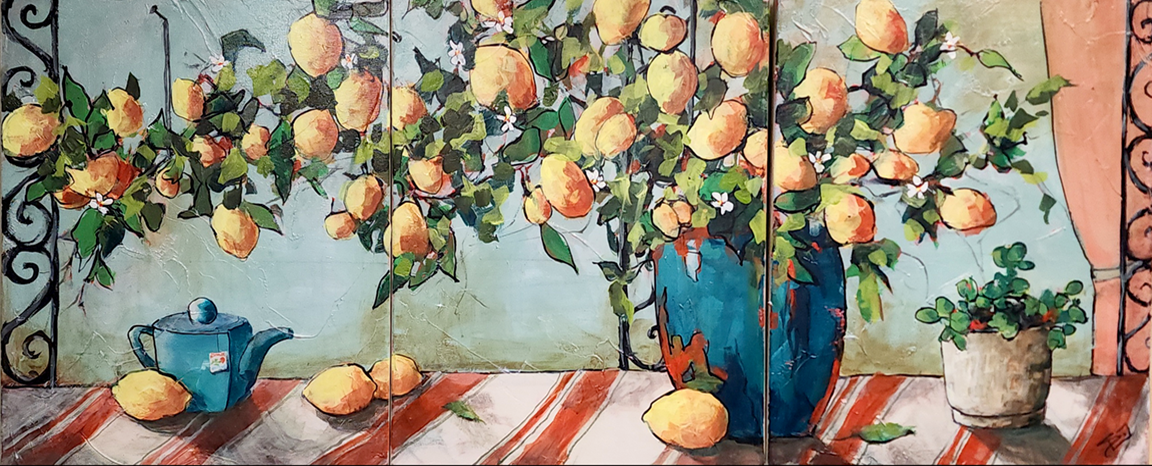
“Lemons and Jade” Acrylic Triptych 20 × 48 inches
Interestingly, I see this happen with my students, too.
There is a moment when a student who has been asking, “What should I do here?” starts saying, “I think I'm going to try this.”
That's a very different question.
And I love that moment.
Because my job as a teacher isn't to make students dependent on me. It's to help them develop enough understanding and confidence to make their own decisions. I don't want my students to paint like me. I want them to discover what they have to say.
And perhaps that's true for me, too.
I will always be a student. I hope I always will be. There will always be another artist to learn from, another painting that makes me look twice, another problem I haven't solved yet.
But I'm becoming more comfortable with not knowing the answer before I begin.
Maybe that's what it means for the teacher to disappear.
Not that we stop needing teachers, but that eventually we carry the teacher inside us.
We become willing to trust our own eyes, our own curiosity and our own experience.
And then we begin again.
—Sue